
Artificial intelligence is one of the most polarising technological innovations ever introduced to the world of business. AI agents are already being used to take over routine tasks, provide customer service, extract and categorise data, and even write things for professionals, but many remain sceptical about its benefits or fear that working society will become too dependent on it.
However, it is actively playing a crucial role in the evolution of business leadership. CEOs, managers and other leaders are not handing over control to machines but rather using them to positively augment decision-making and improve workplace structures. Those with extensive professional portfolios – such as Volker Hartzsch, an experienced business coach – understand that leaders must innovate and evolve for companies to achieve meaningful growth.
Nowadays, that growth is almost impossible without embracing the changing professional technological landscape, which is currently – and will continue to be – dominated by AI. Social media algorithms, for instance, are shaped by public attention, and generative AI is able to scan the data available and produce or suggest appropriate content for companies to create.
Leaders can use it to make strategic business decisions, directing attention, time and resources towards the most viable and potentially successful projects, while simultaneously reducing mundane tasks for busy workers. It’s down to those in leadership roles to know what their goals are and who the company serves in order to best use AI to reshape business initiatives.
Traditional decision-making will not disappear; it will incorporate AI’s methods to make the process quicker, evidence-based and more accurate. Real-time data processing and pattern recognition are two factors that allow leaders to anticipate market trends and consumer habits, and predictive AI models can perform them. The results may influence what a leader decides to do, revolutionise a working process or increase overall company efficiency.
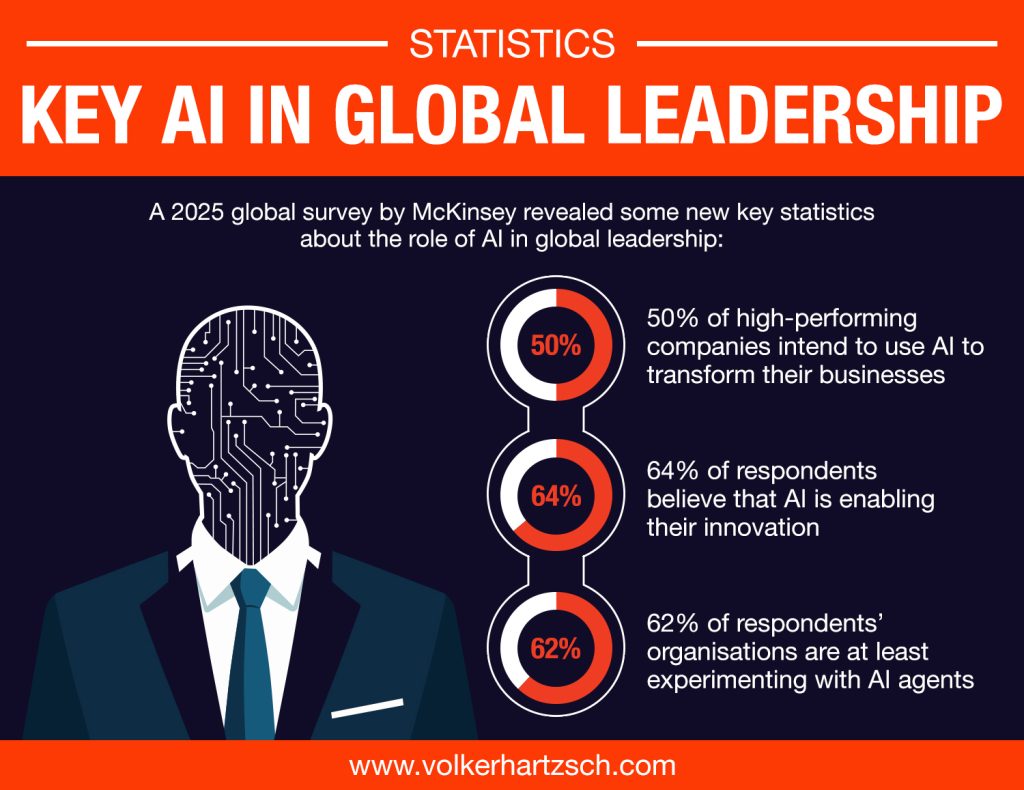
Many organisations are already redesigning workflows around their AI agents, with keen involvement from those in the most powerful positions. Professional policies and processes are in prolonged states of development, deploying different AI strategies to determine which will best support company growth. Leaders who fully invest in them are more likely to see positive changes than those in smaller, less innovative companies.
Generative, analytical and predictive AI are all agents of the future, but now is the time to integrate them into business leadership. They help to fill data insight gaps, removing blind spots and reducing risks. If used correctly, AI could breed a new era of informed, efficient and independent business leaders.